Quick answer
The short version
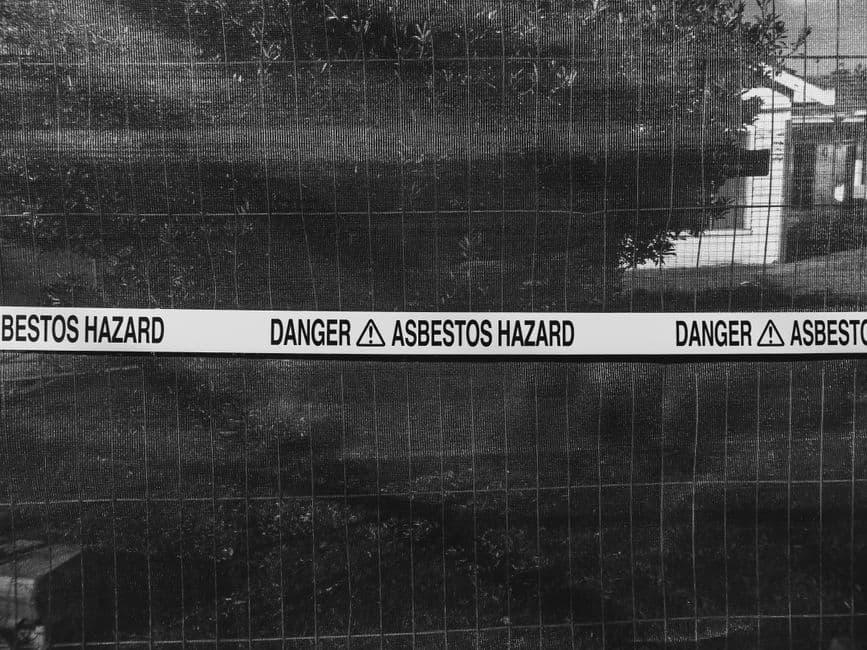
Asbestos awareness means knowing what asbestos looks like, where it turns up in buildings, and what to do if you disturb it or suspect it's there. Under the Control of Asbestos Regulations 2012 (CAR 2012), anyone whose work could disturb asbestos-containing materials needs this awareness, even if they never plan to work on asbestos directly. If your job takes you into a building built or refurbished before 2000, that includes you.
In short
Key takeaways
- Asbestos was banned in UK construction materials by November 1999, so any building built or refurbished before 2000 could contain it.
- CAR 2012 puts a duty to manage on the building owner or employer, but every tradesperson working on site has duties too.
- Most asbestos removal needs a HSE-licensed contractor, but non-licensed notifiable work (NNLW) and non-licensed work (NLW) cover some lower-risk tasks.
- If you find suspected asbestos, stop work immediately, don't disturb it, and tell the duty holder before doing anything else.
- Asbestos-related diseases can take 15 to 60 years to show up, which is exactly why the rules exist before anyone gets ill.
What Is Asbestos and Where Do You Find It?
Asbestos is a group of naturally occurring fibrous minerals that were used in building materials for most of the 20th century because they're fire-resistant, strong, and cheap to work with. The fibres are the problem. When asbestos-containing material is disturbed, drilled, cut, sanded, or broken, it releases tiny fibres into the air. Breathe enough of them in over time and they can cause serious, often fatal, lung disease.
The tricky part for anyone working in construction or maintenance is that asbestos doesn't announce itself. It was mixed into cement, sprayed as insulation, woven into gaskets, and pressed into ceiling tiles. Unless a material has been tested, you can't tell just by looking whether it contains asbestos or not. That's why awareness matters more than recognition, you need to know where it's likely to be, not just what it looks like.
Checklist
- Roof sheets and roofing felt, especially corrugated cement sheets
- Pipe lagging and boiler insulation
- Ceiling tiles and floor tiles, particularly older vinyl and thermoplastic tiles
- Textured coatings on walls and ceilings, such as Artex
- Insulation panels around heaters, boilers, and fire doors
- Gaskets and rope seals in older plumbing and heating systems
- Fuse boxes and electrical equipment housings
- Soffits, gutters, and rainwater goods on older properties
If you're working on anything built or refurbished before the year 2000, treat these materials as suspect until you know otherwise. That's not paranoia, it's the practical starting point that CAR 2012 expects of you.
Why Asbestos Is Still a Problem for Tradespeople
Asbestos use in the UK wasn't banned all at once. Blue and brown asbestos (amosite and crocidolite) were banned in 1985. White asbestos (chrysotile), which was used far more widely and for longer, wasn't banned until November 1999, with the ban taking full effect in UK law by 2000. That means asbestos was a legal, common building material right up until the turn of the millennium.
The practical consequence is straightforward: any building built or refurbished before 2000 might contain asbestos somewhere in its fabric. That covers a huge share of the UK's housing stock, schools, hospitals, offices, and industrial buildings. It doesn't matter whether the building looks modern from the outside, if it was refurbished with asbestos-containing materials before the ban, those materials could still be there under a newer finish.
The other reason this still matters decades after the ban is the latency period of asbestos-related disease. Mesothelioma, asbestosis, lung cancer, and pleural thickening don't show symptoms straight away. It typically takes somewhere between 15 and 60 years from exposure for disease to develop. People who were exposed to asbestos as young tradespeople in the 1980s and 1990s are still being diagnosed with mesothelioma today. The risk you're managing on site now is a risk for your health decades into the future, not just for the rest of the working week.
Definition
Asbestos Awareness
Asbestos awareness is the knowledge required by anyone whose work could foreseeably disturb asbestos-containing materials, covering how to recognise where asbestos might be present, understanding the health risks, knowing the legal duties under the Control of Asbestos Regulations 2012, and knowing what to do if suspected asbestos is found or disturbed. It is distinct from asbestos removal training, which is only needed by those carrying out licensed or non-licensed asbestos work itself.
The Control of Asbestos Regulations 2012: What They Mean for You
The Control of Asbestos Regulations 2012 (CAR 2012, SI 2012/0689) is the main piece of legislation covering asbestos in the workplace. It brought together earlier asbestos regulations into one set of rules, and it applies to anyone who might come into contact with asbestos through their work, not just specialist asbestos removal contractors.
A handful of regulations within CAR 2012 are the ones that matter most if you're doing non-licensed work on or around older buildings.
Regulation 5: Duty to Manage Asbestos
Regulation 5 places a duty to manage asbestos in non-domestic premises on the "duty holder", usually the building owner, landlord, or employer with responsibility for the premises. The duty holder has to find out whether asbestos is present, assume materials contain asbestos unless there's strong evidence otherwise, keep a record of its location and condition, and make that information available to anyone who might disturb it, including you.
If you're arriving on a job, ask whether an asbestos survey exists for the building and ask to see it. A competent duty holder should be able to produce one. If they can't, that's a warning sign, not a green light to crack on regardless.
Regulation 6: Identify Before You Disturb
Regulation 6 requires that asbestos is identified before carrying out any work that could disturb it. In practice, this means a suitable and sufficient assessment has to happen before drilling, cutting, sanding, or removing anything in an older building, not as an afterthought once dust is already in the air. If no survey or assessment has been done and the material is suspect, the work shouldn't start until it has been.
Regulation 8: Information, Instruction, and Training
Regulation 8 requires employers to provide information, instruction, and training to anyone liable to be exposed to asbestos at work, so they understand the risks, how to avoid them, and the precautions they need to take. This is the regulation that underpins asbestos awareness training. It's not optional for anyone whose work could reasonably disturb asbestos-containing materials, and it needs refreshing periodically, not done once and forgotten.
Regulation 10: Licensing
Regulation 10 sets out which asbestos work requires a HSE-licensed contractor. Most higher-risk asbestos work, removal of sprayed coatings, lagging, or asbestos insulation board in significant quantities, has to be carried out by a contractor holding an HSE asbestos licence. But not all work with asbestos-containing materials needs a licence. Where the exposure risk is lower, work falls into the non-licensed categories covered below.
HSE's Approved Code of Practice, L143 (Managing and Working with Asbestos), sets out the detail behind these regulations and is worth reading if you want the full picture rather than the summary version.
Licensed vs Non-Licensed Asbestos Work
Licensed Work vs Non-Licensed Asbestos Work
| Licensed Work | Non-Licensed Notifiable Work (NNLW) | Non-Licensed Work (NLW) |
|---|---|---|
| Removal of sprayed asbestos coatings and asbestos lagging | Short-duration work on asbestos insulating board, cement, or textured coatings where exposure could exceed the control limit | Work on asbestos-containing materials where exposure is expected to stay below the control limit |
| Must be carried out by a HSE-licensed contractor | Does not require a licence, but must be notified to HSE before work starts | Does not require a licence and is not notifiable |
| High risk of fibre release due to friable materials | Exposure may be sporadic and low intensity, but the risk is still real | Lower risk, but still needs a suitable risk assessment and safe method |
| Requires notification, medical surveillance, and detailed record keeping | Requires notification to HSE, health records, and medical surveillance after 10 years of this type of work | No notification requirement, but records of the work should still be kept |
Where a job lands in this table depends on the material, the task, and how much fibre release is likely, not just on gut feeling. Drilling a few holes through asbestos cement sheet for a bracket fixing sits in a different category to stripping out a run of asbestos insulating board ceiling tiles. If you're not sure which category your task falls into, that uncertainty is itself a reason to stop and get advice rather than guess and carry on.
Non-licensed notifiable work still carries real duties. HSE has to be notified before work starts, health records have to be kept, and anyone doing this type of work regularly needs medical surveillance once they've been doing it for 10 years. Treating NNLW as "not proper asbestos work so it doesn't matter" is a mistake that shows up in enforcement action.
What to Do If You Find Suspected Asbestos on Site
Every tradesperson working in an older building should know this sequence without having to think about it. It applies whether you're a joiner who's just cut into a ceiling panel or a plumber who's disturbed lagging around a pipe.
Step by step
None of these steps require you to know for certain that the material is asbestos. If it looks like it could be, that's enough to trigger this sequence. Acting on a false alarm costs you some downtime. Carrying on when it turns out to be real asbestos costs a lot more, for you and for everyone else on site.
Asbestos Awareness Training Requirements
Asbestos awareness training is required under Regulation 8 for anyone who could foreseeably encounter or disturb asbestos-containing materials during their normal work, even if asbestos work itself isn't part of their job. That's a wide group in practice: electricians, plumbers, joiners, roofers, plasterers, heating engineers, and general builders working on pre-2000 buildings all fall into this category.
The training itself covers what asbestos is, where it's likely to be found, the health risks and how disease develops, the difference between licensed and non-licensed work, and what to do if suspected asbestos is discovered or disturbed. It's usually a short course, delivered in person or online, and it needs to be refreshed regularly, typically annually, so the knowledge stays current and workers don't drift back into treating older buildings as risk-free.
Awareness training is not the same as training to carry out non-licensed asbestos work itself. If your role involves actually working with asbestos-containing materials, even at the NLW level, you need task-specific training on top of general awareness, covering the correct methods, PPE, and decontamination procedures for that work.
Asbestos waste generated during any of this work has to be double-bagged in suitable asbestos waste bags, clearly labelled, and disposed of at a licensed waste facility. It can't go in a general skip or standard waste stream, and getting this wrong is a compliance failure in its own right, separate from the work itself.
Common Mistakes
Common mistakes
Important safety warning
Breaching CAR 2012 is a criminal offence. HSE can issue improvement or prohibition notices, and prosecutions can lead to unlimited fines and imprisonment for the most serious failures. But the paperwork risk is the smaller part of this. Asbestos-related diseases, mesothelioma, asbestosis, lung cancer, and pleural thickening, are largely incurable once they develop, and by the time symptoms appear it's usually decades too late to do anything about the exposure that caused them. The duty to manage exists because there is no acceptable level of avoidable asbestos exposure.