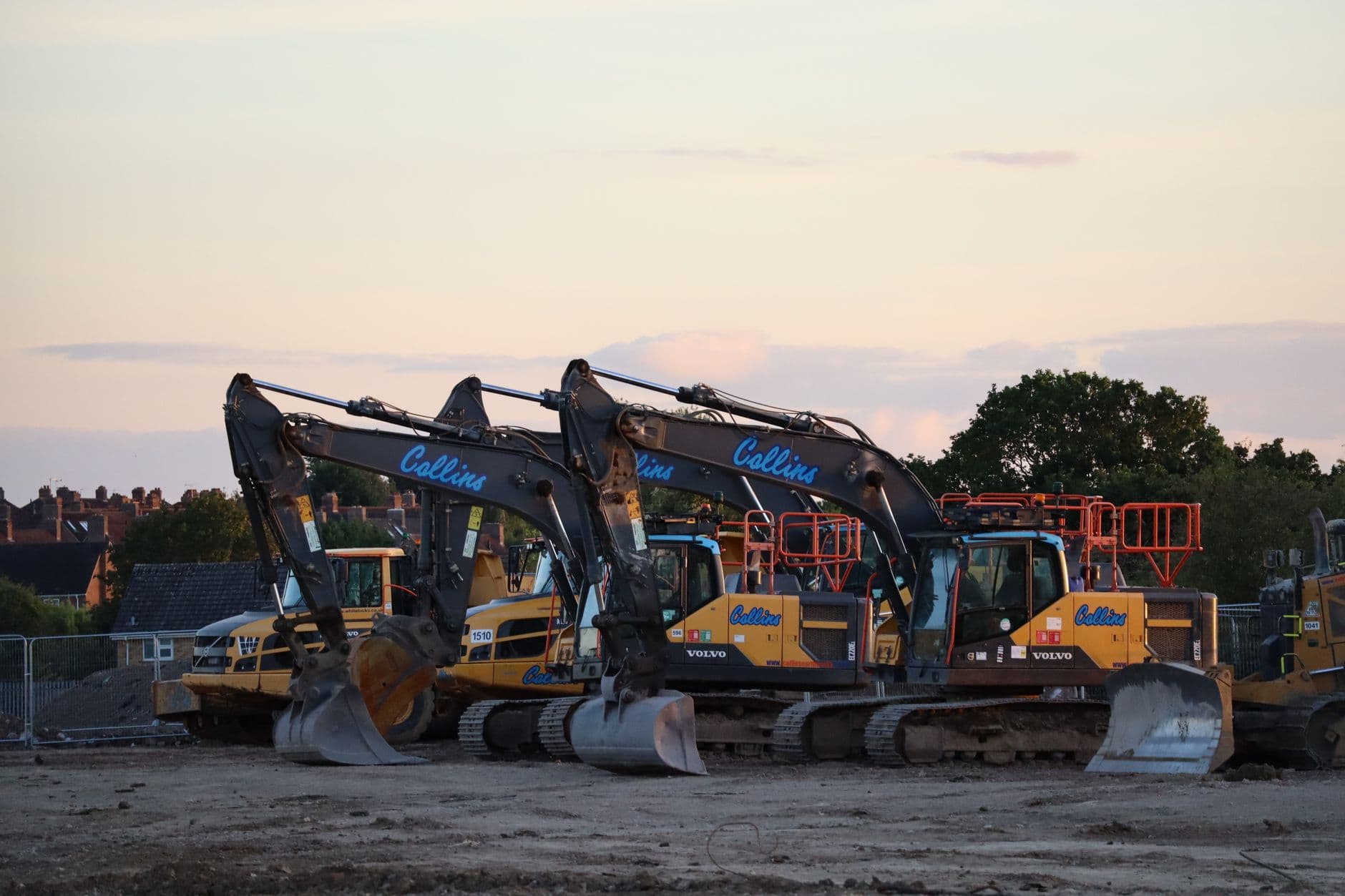
You've been asked for RAMS before the machine can track in. The generic guide you found tells you to identify hazards, rate the risk and add controls, which is true as far as it goes and useless when the question is whether the trench sheets go in before the footing dig, or what happens when the bucket meets a live cable the drawings show crossing your run. This guide covers the digging half of a groundworks risk assessment.
Quick answer
The short version
A groundworks risk assessment has to cover the hazards that come with breaking ground: collapse of the sides, buried services, undermining nearby structures, groundwater and fumes. It also needs to reflect the CDM 2015 inspection regime that applies to excavations, with a competent person inspecting supported or battered ground at the start of every shift. Support or battering is planned before digging, services are detected and marked before excavation, and inspections are recorded.
Summary
At a glance
- Who it's for
- Groundworkers and small contractors digging footings, drainage and service trenches.
- The big hazards
- Collapse, buried services, falls into the excavation, groundwater, fumes.
- What the law requires
- CDM 2015 reg 22, all practicable steps to prevent collapse and burial.
- Where to record it
- A RAMS naming the excavation, its depth range and the ground conditions.
What Makes Groundworks Different
Most of a groundworks risk assessment follows the same logic as any construction paperwork, and the generic structure is covered properly in our guide on how to write RAMS for construction work. This article assumes you know what RAMS are and sticks to what changes when the work involves digging.
Five things make groundworks their own discipline. Ground can collapse without warning and bury whoever is in the hole. Services run through that ground where nobody can see them. Deep digging can undermine foundations, scaffold footings and trees. Groundwater and surface water change the ground while you work. And excavations carry their own inspection duties under CDM 2015, with a written report regime most other site work doesn't have. Whatever you write has to fit the actual task, site, ground conditions, people and equipment, not a recycled document from a different job.
Preventing Trench Collapse
Support It or Batter It
The duty on collapse sits in regulation 22 of the Construction (Design and Management) Regulations 2015, and it's wider than most site quotes suggest.
Source-backed note
HSE note
CDM 2015 regulation 22 requires all practicable steps to prevent danger from excavation work, including providing supports or battering where necessary, so that no excavation or part of one collapses, no material is dislodged or falls, and no person is buried or trapped.
Site folklore says there's a depth you can dig to before support becomes a requirement. There is no such depth, in either direction. HSE's position is that no ground can be relied upon to stand unsupported in all circumstances, and depending on conditions a cubic metre of soil can weigh in excess of 1.5 tonnes. That's a small car landing on you at once.
Important safety warning
Never enter an unsupported excavation. There is no depth in law below which support or battering is optional, and no ground can be relied upon to stand unsupported in all circumstances. If the sides are not supported or battered, the trench is not safe to enter.
So the decision gets made before the machine starts. Decide what temporary support the excavation needs and get the kit, trench sheets, props, baulks and anything else, on site before work begins. Digging first and working out how to hold the ground afterwards is the wrong order, and it pressures people into an open hole.
Battering the sides to a safe angle of repose is the other route, and there's no universal number to copy. In granular soils the slope should be less than the natural angle of repose, and in wet ground a considerably flatter slope is needed. The angle you settle on belongs in the RAMS for that job and that ground.
Keeping People, Plant and Material Out
The other half of the duty is keeping people, plant and material out of the trench, and the controls are unglamorous but they work.
- Protect the edges with substantial barriers where people are liable to fall in, with toeboards or similar to stop material being kicked over the edge.
- Do not park plant and vehicles close to the sides. The extra loading makes collapse more likely.
- Keep spoil stored well back from the edge rather than heaped where it can fall back in or load the side.
Mind what you undermine as well as what you stand in. Excavations can undermine scaffold footings, buried services and the foundations of nearby buildings and walls, and a survey of those foundations and a structural engineer's advice may be needed before you dig near them.
Getting In, Out, and Breathing
People need a way in and out that doesn't involve climbing the spoil. Where ladders are reasonable, HSE expects them to be suitable and of sufficient strength, on a firm level base, secured against slipping, and extending at least 1 m above the landing place unless a suitable alternative handhold is provided. Put the ladder in the method statement so it isn't an afterthought on day three.
Fumes collect in holes. Do not run petrol or diesel engines in an excavation without ducting the fumes safely away or providing forced ventilation, and do not site that equipment in or near the edge. A generator at the lip of a deep trench pushes its exhaust straight down.
Look up as well as down. Raised tipper bodies and excavators can arc to overhead power lines, so working near or below them should be avoided where possible and planned carefully where it can't be.
Underground Services: Detect Before You Dig
The other way excavation work goes wrong is the bucket meeting something live, pressurised or both. HSE's book HSG47, Avoiding danger from underground services, builds the defence around three elements: planning the work, detecting and marking the services, then digging safely. All three are needed. Skip one and the other two won't save you.
Plan the Work
Assume services are present unless you've been shown otherwise. That's HSG47's starting position and it should be stated openly in your groundworks method statement. Contact the owners and operators of the services for information about location and status, and get drawings before you price the dig rather than the night before.
Your client has duties here too. Under CDM 2015 a commercial client must provide pre-construction information to every contractor appointed or being considered, and HSE expects that to include ground conditions, underground structures or watercourses, and the location of existing services. If it hasn't arrived, ask in writing and keep a record of the asking.
Detect and Mark
Detection on site means a CAT, a cable avoidance tool, usually worked with a signal generator, the Genny. The CAT picks up signals given off by or applied to buried services. The Genny applies a signal to a service so the CAT can trace it, which matters for services that don't radiate anything detectable themselves.
The instrument is only as good as the person holding it. HSG47 expects locating devices to be used competently, and a scan done badly doesn't prove the ground is clear. Mark what you find, confirm the status of what you can, whether a cable is live or a gas main is pressurised, and record the survey so somebody can check it later.
Dig Safely
With the route detected and marked, HSG47's approach is trial holes and hand digging to confirm the position of any detected service, taking special care above or close to the assumed line of one. Mechanical excavation is a common source of damage, and the guidance has a second person assisting the driver from a safe position. On sites with dense or unknown services, a permit to dig signed off before the machine moves is worth building into the system.
Backfilling is part of it too. Services must be properly supported and protected in the ground, and concrete must not be used to encase them, however tidy a fix it looks.
If You Hit Something
If a service is damaged, inform the owner or operator. For electricity cables, gas pipes, other pipelines and high-pressure water mains, keep people well clear of the area until it's repaired or made safe. Don't backfill over a damaged service to sort it out later, and don't assume a struck cable that looks fine is dead.
Inspections and Reports
Excavations have their own inspection regime. Under CDM 2015, no work is carried out in an excavation where supports or battering have been provided unless a competent person has inspected it, along with any work equipment and materials affecting its safety, at the start of the shift, after any event likely to have affected its strength or stability, and after any material unintentionally falls or is dislodged. Work only continues once the inspector is satisfied it can be carried out safely.
That's a daily duty, not a one-off. A trench inspected on Monday has not been inspected on Tuesday, and rain, plant movement or a fall of material resets the clock.
Under CDM 2015 regulation 24 and HSE guidance CIS47, although the excavation is inspected at the start of every shift, only one written report is required in any seven-day period for routine start-of-shift checks. However, if the inspector is not satisfied that work can be carried out safely, or if an additional inspection is carried out after an event affecting stability or an accidental fall of material, they must inform the person the inspection was carried out for before the end of the shift and provide a written report within 24 hours. A written report has prescribed contents: the name and address of the person it was carried out for, the location and description of the place inspected (including any work equipment and materials), the date and time, any matters giving rise to a risk, the action taken, further action considered necessary, and the name and position of the person making the report. Reports must be kept at the site until the work is finished and for three months after. When an inspector visits, this record is high on their list, which is covered further in our guide on what an HSE inspector looks for.
When a Trench Becomes a Confined Space
Deep trenches, shafts and anything poorly ventilated can meet the definition of a confined space, and the Confined Spaces Regulations 1997 then apply on top of everything else. They carry three key duties: avoid entry where you reasonably can, by doing the work from outside; if entry is unavoidable, follow a safe system of work; and put emergency rescue arrangements in place before anyone goes in. HSE's Approved Code of Practice L101 and the INDG258 leaflet set out the detail. These duties add to your general risk assessment rather than replacing it.
What to Write in Your Excavation RAMS
This is where the document earns its keep. A groundworks risk assessment that says "check for services and make the trench safe" protects nobody, least of all the person climbing into the hole. Choose controls that remove the hazard rather than paper over it, following the hierarchy of controls. Then write them so a groundworker can follow them on a wet Tuesday.
Weak wording vs better wording
Weak
Better
Weak wording vs better wording
Weak
Better
Weak wording vs better wording
Weak
Better
Risk assessment example
- Hazard
- Trench collapse in a 1.8 m deep footing trench in granular soil.
- Who may be harmed
- The groundworker in the trench and anyone working at the edge.
- Controls
- Batter the sides to a safe angle for granular soil or install trench sheets and props before entry. Keep the excavator and spoil back from the edge, protect the edges with barriers and toeboards, and have a named competent person inspect at the start of every shift and record the report.
- Residual risk
- Low once support or battering is in place and inspected.
RAMS Builder tip
If you'd rather start from a template built around these hazards, our groundworker RAMS is a shorter route than a blank page.
Checklist
- Service drawings and pre-construction information obtained
- CAT and Genny scan completed and services marked
- Support or battering method decided and kit on site before digging
- Edge protection with barriers and toeboards in place
- Access ladder on a firm base, secured, extending above the landing place
- Competent person booked to inspect at the start of every shift
- Inspection report form ready on site
Common mistakes
- Believing a shallow trench cannot bury someone
- Relying on a CAT scan alone without drawings
- Parking the excavator next to the trench
- Storing spoil at the trench edge
- Treating one inspection as covering the whole job
- Copying a generic construction RAMS unchanged
Next step
Get your RAMS sorted
RAMS Builder helps small UK contractors write clear, trade-specific RAMS without wrestling with a Word template from a blank page.