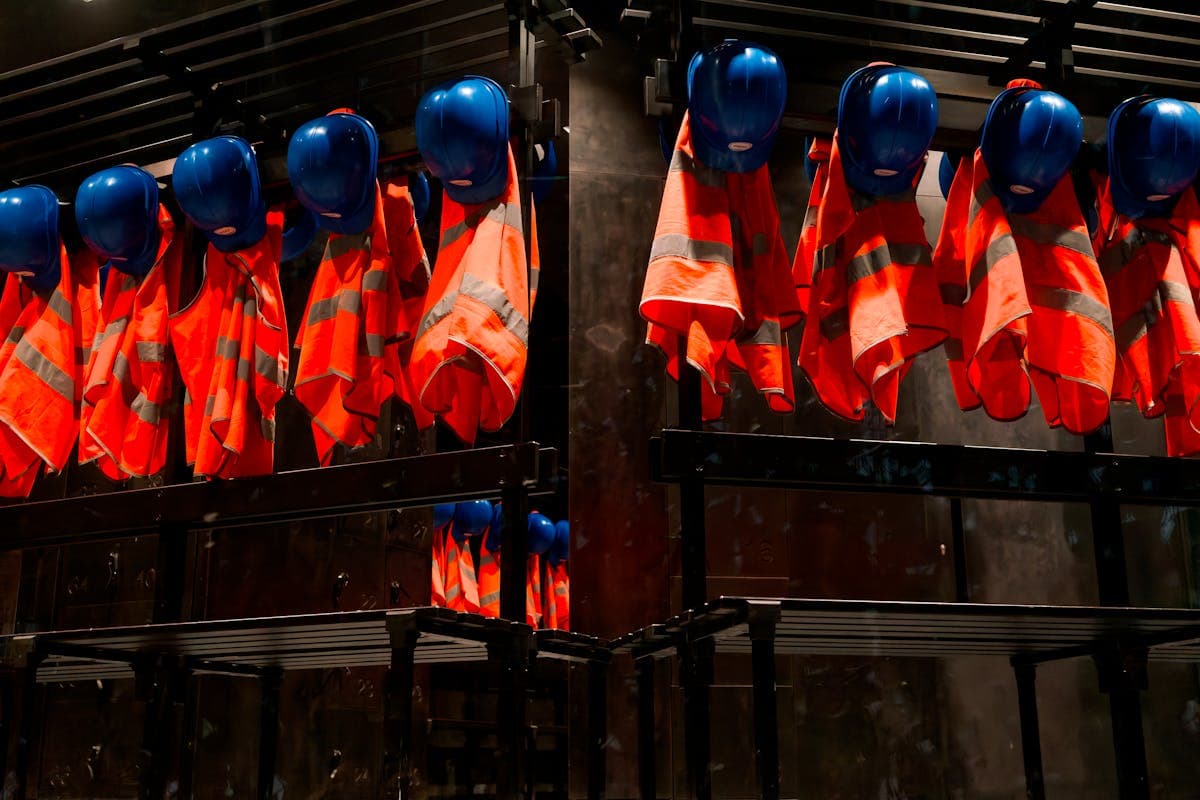
The Hierarchy of Controls, Why PPE Is Always the Last Resort, Not the First
Before you specify a single item of PPE for a construction task, you need to work through the hierarchy of controls. This is not optional. The Personal Protective Equipment at Work Regulations 2022 and the broader health and safety framework make it clear. The hierarchy runs in order of effectiveness, most reliable to least: Elimination, remove the hazard entirely so the risk no longer exists. Substitution, replace the hazardous substance or process with something less hazardous. Engineering Controls, isolate people from the hazard through physical means such as guards, barriers, local exhaust ventilation. Administrative Controls, change the way people work through procedures, training, signage, supervision, and rotation. PPE, protect the individual as the last resort when higher-level controls do not go far enough. PPE sits at the bottom of the hierarchy for a fundamental reason: it protects the individual worker but does nothing to remove the hazard from the workplace. If the respirator seal is broken, if the safety glasses are scratched, if the gloves have a tear, the hazard is completely unchanged. PPE can also fail without warning until the moment you actually need it. A worker wearing PPE that appears to be functioning normally can find it fails catastrophically at the critical moment. Engineering controls do not have this reliability problem, a guard on a saw does not forget to be in place. In practice, PPE requirements construction UK trades must meet almost always coexist with other controls at higher levels. For electrical work, the primary control is dead working and lock-off, not insulated gloves. For dust-generating work, the primary control is extraction at source, not a respirator. PPE is the last line of defence when the hazard cannot be adequately controlled by elimination, substitution, or engineering controls. When you write your RAMS, you need to demonstrate that you have considered the higher-level controls before specifying PPE. If your RAMS jumps straight to PPE as the only control measure for a significant hazard, a competent principal contractor will reject it, and rightfully so. That said, PPE is indispensable for many construction tasks. For some hazards, arc flash from electrical equipment, for example, the available engineering controls are limited and arc-rated PPE is the primary protection. For others, flying debris from cutting operations, impact from ejected fragments, PPE may be the only practical protection available once engineering controls are in place. The key is specifying the right PPE for the specific hazard, at the correct EN standard, with workers trained in its correct use and maintenance.
The Personal Protective Equipment at Work Regulations 2022, What They Actually Require
The Personal Protective Equipment at Work Regulations 2022 came into force on 6 April 2022, replacing the 1992 Regulations and implementing EU Regulation 2016/425. These Regulations impose specific duties on employers and self-employed persons regarding PPE. They apply whether you are an employer with multiple employees or a self-employed person providing your own kit. The core duty is straightforward: employers must provide suitable PPE to workers at no cost to the worker. If PPE is required for a task, the employer, not the worker, must provide it. Self-employed persons must ensure suitable PPE is available for their own use. This is a legal requirement, not a suggestion. Breach can result in enforcement action by HSE including improvement notices, prohibition notices, and prosecution in serious cases. The Regulations also require that PPE is appropriate for the hazard it protects against, not just something that provides a nominal barrier. PPE that is inadequate for the specific hazard does not comply. For example, a basic disposable dust mask that does not meet FFP2 or FFP3 filtration standards is not appropriate PPE for crystalline silica exposure, regardless of intention. The PPE must match the hazard in terms of filtration efficiency, impact resistance, thermal protection, or whatever property is relevant. PPE must also be suitable for the individual user. It must fit, adjustable to the wearer's size and shape, available in sufficient size range to fit all workers. A hard hat that is too large and falls down over the wearer's eyes is not suitable. A respirator that does not create a proper seal because of facial hair or unusual facial structure is not suitable for the intended protection. PPE that is uncomfortable or impractical will not be worn consistently, and PPE that is not worn provides zero protection. The suitability requirement also extends to working conditions, PPE must be appropriate for the temperature, humidity, and physical demands of the work. The Regulations also require that PPE be maintained and replaced when necessary. Hard hats have a typical lifespan of 3 to 5 years from the date of manufacture, even if not visibly damaged, the internal shell degrades due to UV, temperature extremes, and chemical exposure. Respirator filters have a limited shelf life and a limited operational life once opened and fitted. Safety harnesses must be retired immediately after any significant fall arrest event, regardless of apparent condition.
Head Protection, EN 397 Industrial Safety Helmets and EN 50365 Electrical Helmets
Head protection is required on virtually all construction sites. The relevant standard is EN 397, which specifies requirements for industrial safety helmets designed to protect against falling objects, impact against fixed objects, and, for some helmets, limited voltage protection from accidental electric shock. Understanding the markings and limitations of EN 397 helmets is essential for anyone specifying or using head protection on a construction site. EN 397 helmets protect against impact from falling objects, a dropped tool, a dislodged brick, and against striking fixed objects, walking into beams, hitting your head on pipework. The standard requires helmets to withstand a 5kg impact from a height of one metre, with energy absorption tested at the crown, which is the most vulnerable position in a falling object scenario. The helmet shell distributes the impact force across a wider area of the skull. EN 397 helmets have optional markings that extend their protection. The LD marking indicates protection against lateral deformation, useful if the impact is not directly vertical. Temperature ratings for very low, down to minus 30 degrees C, or very high temperatures are relevant for certain site environments. The most important optional marking for electrical work is 440V AC, which indicates protection against accidental contact with live electrical conductors at up to 440 volts AC, useful for general construction work near overhead lines or in electrical cupboards but not sufficient for actual electrical trade work. For electrical work at higher voltages, or where arc flash is a significant hazard, EN 50365 specifies helmets with improved electrical insulation designed for electrical work. These provide protection against alternating currents of up to 1000V in dry conditions and are the appropriate choice for electrical switching operations, fault finding on live equipment, and any work where arc flash risk requires arc-rated face shields or integrated visor systems. Standard EN 397 helmets with 440V marking are not adequate for this type of work. Hard hat replacement is frequently overlooked. Most manufacturers specify a maximum lifespan of 3 to 5 years from the date of manufacture, check the date stamp inside the helmet. Even without visible damage, the internal shell material degrades over time. Replace hard hats immediately after any significant impact, even if no visible damage is apparent, the energy absorption capacity may have been compromised.
Eye Protection, EN 166 Standards and Markings for All Construction Hazards
Eye protection is required for any task that produces airborne particles, liquid splashes, or radiant energy. The relevant standard is EN 166, which specifies requirements for all occupational eye protection. Specifying the wrong type of eyewear is a common and serious mistake, understand the markings before you buy. EN 166 uses a system of mandatory and optional markings. The mandatory marking is the manufacturer's mark and the number 166, confirming basic standard compliance. The mechanical strength category is also mandatory: S, robust, basic impact; F, low energy impact, typically from small fast-moving particles from manual drilling or light grinding; B, medium energy impact, typically from power tool fragments and ejected materials. For most construction work involving power tools, cutting, grinding, drilling, chasing, B or F marking is required. Specifying the wrong strength category risks failure when you need it most. Optional markings for specific hazards include 8, optical radiation protection, required for welding and cutting where specific shade numbers are mandated; 9, molten metal and hot solids protection, required for grinding on metal substrates where heated particles may be ejected; and 3, liquid splash protection, required for any work involving liquids that could splash into the eyes. For wet cutting of masonry, where dust and liquid are both present, a combined marking of 3 and B or 3 and F is appropriate. Check the lens marking carefully, the same eyewear may have different markings for the lens and the frame. For most general construction work, cutting brick or block, grinding, drilling, chasing, EN 166 1 B or 1 F is appropriate. For masonry work, tile cutting with water suppression, or any work producing slurry, EN 166 3 is recommended for liquid splash protection. For welding, the appropriate shade number, typically 1.7, 2, 3, or higher depending on the welding process and current, is required, and the eyewear must comply with EN 169 for welding filters or EN 170 for UV filters in addition to basic EN 166.
Hearing Protection, EN 352 Requirements for Noisy Construction Environments
Hearing protection is mandatory when noise levels reach 80 decibels, dB, and must be worn when levels reach 85dB or above, specified in the Control of Noise at Work Regulations 2005. Construction sites are consistently noisy environments. Most power tools used in construction produce noise levels well above 85dB at the operator's position, and anyone working nearby without hearing protection is at risk of permanent noise-induced hearing loss that develops gradually over years of exposure. The most common construction activities with noise levels at or above 85dB include angle grinding, 95 to 110dB depending on disc size and material; concrete breaking and demolition using breakers and hydraulic hammers, 100 to 115dB; circular sawing and chop sawing, 95 to 105dB; impact nailing using nail guns, 100 to 115dB; and impact drilling, 90 to 100dB. Even brief exposure to these noise levels without protection can cause permanent hearing damage with sustained exposure. Construction workers regularly exposed without hearing protection commonly develop measurable noise-induced hearing loss by their forties or fifties, often before they notice the problem themselves. Hearing protection must comply with EN 352. The standard has multiple parts: EN 352-1 for ear muffs, over-ear hearing protectors with headband or helmet attachment; EN 352-2 for ear plugs, in-ear devices including disposable foam plugs and reusable moulded plugs; EN 352-3 for helmet-mounted ear muffs. All hearing protectors meeting EN 352 carry a Signal-to-Noise Ratio, SNR, rating indicating how much noise the protector reduces. Higher SNR values indicate greater noise reduction, but the SNR must be appropriate for the actual noise level. A general guide: for noise levels around 85 to 90dB, an SNR of 25 to 30 is typically appropriate, reducing noise to approximately 60dB, which is below the 80dB lower action level. For noise levels above 100dB, a higher SNR of 30 to 35 may be needed. The goal is reducing noise exposure to below 80dB ideally, or as low as reasonably practicable where very high source noise makes this unachievable. Double hearing protection, ear plugs plus ear muffs, is required for noise levels above 115dB. This combination provides approximately 10 to 15dB more attenuation than either type alone. On construction sites, this is most commonly required during breaking and demolition operations using high-energy breakers in enclosed or semi-enclosed spaces where noise reverberates and intensifies.
Respiratory Protection, EN 149 FFP Classifications for Construction Dusts and Fumes
Respiratory protection is required for any task that produces airborne dust, fumes, or other hazardous aerosols. The relevant standards are EN 149 for filtering face piece respirators, dust masks, and EN 140 for half masks and quarter masks used with filter cartridges. Understanding the FFP classification system is essential for specifying appropriate respiratory protection, using an inadequate FFP level for a hazardous dust is a serious error that puts workers at risk of respiratory disease. FFP stands for Filtering Face Piece. FFP respirators are classified into three categories based on filtration efficiency for particles down to 0.3 microns. FFP1 respirators provide the lowest protection, minimum 80 percent filtration efficiency, and are suitable only for nuisance dusts with no known health hazard. FFP1 respirators are not adequate for most construction dusts, including ordinary softwood dust, cement dust, or plaster dust, all of which are known to cause respiratory disease with sustained exposure. If you are using FFP1 on a construction site, you are almost certainly using the wrong mask. FFP2 respirators provide 94 percent filtration efficiency and are suitable for solid and liquid aerosols that are not highly toxic. For construction, FFP2 is the minimum appropriate protection for softwood dust, though hardwoods require FFP3; general construction dust; and non-crystalline silica dust from brick, block, and concrete. FFP2 is adequate for many construction dusts but not sufficient for the most hazardous ones. FFP3 respirators provide 99 percent filtration efficiency and are required for toxic and carcinogenic particles. For construction, FFP3 is mandatory for hardwood dust, classified as a respiratory sensitiser and cause of cancer of the nasal passages and sinuses; engineered wood products including MDF and chipboard which contain formaldehyde-based resins that are carcinogenic; crystalline silica dust from brick, block, masonry, tile, and stone which causes silicosis and is classified as a cause of lung cancer; and any work on pre-2000 buildings where asbestos-containing materials may be disturbed. FFP respirators must create a proper seal with the wearer's face to be effective. Workers must perform a fit check every time they put on a respirator. Facial hair significantly interferes with the seal, workers with beards need alternative protection such as powered air purifying respirators, PAPRs. Fit testing is the formal process for confirming that a specific respirator model fits a specific individual properly.
Hand Protection, EN 388 Mechanical Risks and EN 407 Thermal Protection
Hand protection is required for any task that exposes hands to cuts, abrasions, punctures, crushing, or chemical exposure. The relevant standard for mechanical risks is EN 388, which provides a ratings system for four mechanical properties: abrasion resistance, rated 1 to 4; blade cut resistance, rated 1 to 5; tear resistance, rated 1 to 4; and puncture resistance, rated 1 to 4. Higher numbers indicate greater protection in each category. For construction work involving sharp materials, sheet metal, plasterboard edges, cable cutting, handling threaded rods, a minimum of EN 388 1 4 2 1 is appropriate. For timber work and general material handling where cuts from timber edges are a primary hazard, EN 388 1 3 2 1 is typically adequate. For work involving glass or glazed materials, a higher blade cut resistance is required, level 3 or above. A common and dangerous misconception: wearing gloves when using rotating machinery provides additional protection. In fact, gloves on rotating machinery create an entanglement hazard, loose glove fingers can be caught in the rotating spindle, chuck, or blade and pull the hand into the machine. The correct advice for circular saws, drills, planers, and grinders is to not wear gloves, unless specific gloves have been designed, tested, and approved for use with that specific machine. If in doubt, do not wear gloves with rotating machinery. For work involving heat, welding, gas torching, hot cutting, working near hot surfaces, EN 407 specifies protection against thermal heat and flame. EN 407 ratings cover flame spread, contact heat, convective heat, radiant heat, and small splashes of molten metal, each rated 1 to 4 with higher numbers indicating better performance. For chemical exposure, EN 374 specifies protection against chemicals and micro-organisms, check that the specific chemical you are working with is listed in the glove's documentation.
Foot Protection, EN ISO 20345 Standards and Specific Hazard Markings
Safety footwear is required on virtually all construction sites and must comply with EN ISO 20345. All EN ISO 20345 compliant footwear must provide 200 joule toe protection, enough to resist the impact of a 20kg weight dropped from one metre, and must have puncture-resistant midsoles to protect against nails and other sharp objects. These two requirements are the absolute minimum for construction site footwear and are non-negotiable on any competent contractor's site. Beyond these minimum requirements, EN ISO 20345 specifies additional marking categories for specific hazards. SRA footwear has slip-resistant soles tested on ceramic tile wet with dilute soap solution, appropriate for general construction sites with typical contamination. SRB footwear has slip-resistant soles tested on steel wet with glycerol, appropriate for environments with oil-based contamination. For construction sites, footwear with both SRA and SRB markings, or SRC marking indicating combined slip resistance, is strongly recommended, as site conditions frequently involve both wet tile and wet steel surfaces simultaneously. Additional marking categories relevant to construction work include HRO, heat-resistant outsole, required for torching operations, hot cutting, or contact with hot surfaces; WRU, water-resistant upper, required for outdoor work in wet conditions; E, energy absorption in the heel region, reduces fatigue when walking on hard surfaces; and cleated outsoles, required for work on roofs or other surfaces where additional grip is needed on slopes or profiled surfaces. Footwear for electrical work requires specific consideration. Electrical insulating footwear, marked with the distinctive lightning bolt symbol and rated for specific voltages, is required for work where the wearer may be exposed to electrical shock from accidental contact with live conductors. Anti-static footwear, ESD marking, is required in some environments to prevent static charge buildup that could cause sparking, relevant in pharmaceutical, chemical, or explosives environments but less commonly required on standard construction sites.
Hi-Vis Clothing, Full Body Protection, and Completing Your PPE Specification in RAMS
Hi-vis clothing must comply with EN ISO 20471, the standard for high-visibility warning clothing. The standard classifies hi-vis clothing into three classes based on the minimum area of fluorescent background material and retroreflective tape. Class 1 provides the lowest level of visibility, typically limited to hi-vis waistcoats worn in conjunction with other high-vis garments on the body, and is rarely sufficient on its own for active construction sites. Class 2 provides medium visibility and is typically the minimum requirement for construction workers. Class 3 provides the highest level of visibility and is required for work on high-speed roads or in conditions where maximum visibility is essential. On most construction sites, Class 2 hi-vis is the standard minimum, a hi-vis jacket or workwear with integrated hi-vis panels. A basic tabard vest alone may only meet Class 1 requirements and may not be accepted by principal contractors on active construction sites. Always check the label before purchasing hi-vis clothing for site use. When specifying PPE in your RAMS, you must reference the specific EN standard for each item with the appropriate classification. "Safety footwear" is not a PPE specification, the RAMS should specify "EN ISO 20345 S3 SRC footwear" or equivalent. "Eye protection" is not a PPE specification, the RAMS should specify "EN 166 1 B safety glasses with side shields" or "EN 166 3 face shield" for splash risks. "Respiratory protection" is not a PPE specification, the RAMS should specify "FFP3 respirator, EN 149, for all dust-generating operations including drilling and chasing in brick and masonry" or similar. Each item should be referenced to its EN standard with the relevant marking that matches the specific hazard. PPE that is not CE marked, or UKCA marked since Brexit, is not legal for use in the UK. All PPE must carry the appropriate mark to confirm it meets the requirements of the relevant PPE Regulations. Principal contractors on competent sites check this routinely. PPE without the correct marking may be confiscated and the worker sent off site until compliant PPE is obtained. RAMS Builder can help you draft PPE specifications matched to the trade, task, and hazard profile you describe. Use it to build a starting point with EN standard references and task-specific PPE notes, then review and tailor the selection before submission so it reflects the actual work, tools, materials, and site conditions.