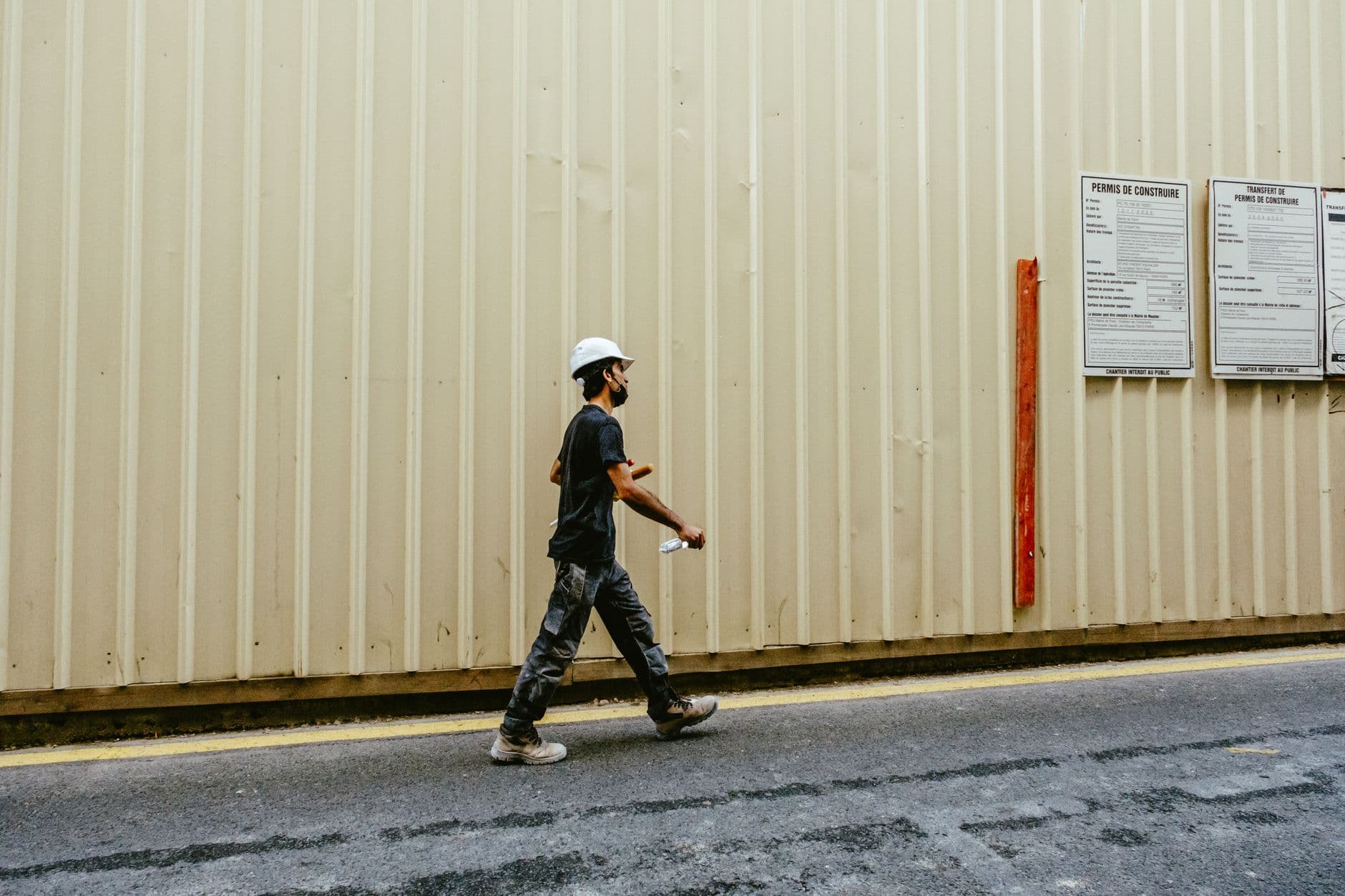
The Law on PPE in the UK
The main legislation covering PPE at work is the Personal Protective Equipment at Work Regulations 1992 (PPER 1992). This was amended in April 2022 by the Personal Protective Equipment at Work (Amendment) Regulations 2022 (PPER 2022), which extended the rules to cover more types of workers.
Under these regulations, employers must provide suitable PPE free of charge when a risk assessment shows it is needed. PPE is the last line of defence, not the first. The hierarchy of controls says you should try to eliminate or reduce the hazard before reaching for the hard hat.
The Health and Safety at Work etc Act 1974 (HSWA) also applies. It is the umbrella law that requires employers to protect workers, and the PPE Regulations sit underneath it.
What Changed in 2022
Before April 2022, PPER 1992 only covered employees (known as limb (a) workers). PPER 2022 extended the same duties to limb (b) workers.
Limb (b) workers are people with a more casual employment relationship. They might work under a contract for services rather than a contract of employment. This includes agency workers and some casual or zero-hours staff.
The key point: from 6 April 2022, if you hire someone and they are a limb (b) worker, you must provide PPE free of charge in the same way you would for a direct employee. There is no difference in treatment.
Employer Duties for PPE
If a risk assessment shows PPE is needed, the employer must:
- provide suitable PPE free of charge
- carry out a PPE suitability assessment before use
- make sure the PPE is compatible with other kit being worn
- maintain and replace PPE as needed
- store PPE properly when not in use
- give workers information, instruction, and training on how to use it
You cannot charge workers for PPE they need to do their job. This is not optional. It is a legal duty under Regulation 4 of PPER 1992.
Worker Duties for PPE
Workers also have responsibilities under the regulations. These apply to both employees and limb (b) workers:
- use PPE in line with the training and instruction they have been given
- return PPE to the storage area provided by the employer
- report any loss or defect to the employer straight away
- not misuse or tamper with PPE deliberately
If a worker damages or loses PPE through no fault of their own, the employer should replace it at no cost. If a worker deliberately damages kit, that is a different matter.
The Self-Employed Question
This is where it gets tricky on site. PPER 1992 and PPER 2022 do not cover the genuinely self-employed. If someone is running their own business and is not a worker as defined by the Employment Rights Act 1996, the hiring company does not have to provide their PPE.
But here is the catch. The principal contractor or contractor still has duties under CDM 2015 to manage the site safely. That includes making sure everyone on site has the right PPE. So while there is no direct duty to provide PPE to a self-employed subcontractor under PPER, the site rules and the risk assessment may still require it.
In practice, many principal contractors provide PPE to all workers on site, including subcontractors, to keep things simple and safe. It is good practice and avoids disputes about who should have what.
Common Construction Scenarios
You Hire Employees Directly
You must provide all required PPE free of charge. Full stop. You cannot ask them to bring their own safety boots or deduct the cost from their wages.
You Hire Through an Agency
Agency workers are typically limb (b) workers. Since April 2022, you must provide them with PPE in the same way as your direct employees. The agency might help with some of this, but the duty sits with the employer controlling the work.
You Subcontract to Another Company
Each employer is responsible for their own workers' PPE. If you are the principal contractor, you set the site rules and the PPE requirements. The subcontractor must then provide PPE to their own team.
A Self-Employed Tradesperson Works for You
If they are genuinely self-employed, PPER does not require you to provide their PPE. But check the site risk assessment. If specific PPE is required for everyone on site, make that clear in the site rules and consider providing it anyway.
PPE Compatibility and Suitability
PPE must be compatible. That means if someone needs to wear a hard hat, ear defenders, and a face mask, all three must work together without reducing each other's protection. You cannot just hand out bits of kit and hope for the best.
Regulation 6 of PPER 1992 says employers must assess PPE before selecting it. The assessment should consider the type of hazard, the conditions on site, the worker, and how the PPE fits with other equipment.
What Counts as PPE
PPE under PPER 1992 includes all equipment intended to be worn or held at work to protect against risks. Common examples on construction sites:
- safety helmets and hard hats
- high-visibility clothing
- safety boots with toe and midsole protection
- gloves for specific hazards
- eye protection such as safety glasses or goggles
- ear defenders or ear plugs
- respiratory protective equipment (RPE)
- safety harnesses and fall arrest kit
Ordinary work clothes and weather protection are generally not classed as PPE unless they protect against a specific hazard.
Enforcement and Penalties
HSE inspectors can issue improvement notices or prohibition notices if PPE is missing or unsuitable. They can also prosecute employers who fail to provide PPE. Fines can be significant, and in serious cases, prison sentences are possible under the HSWA.
Inspectors look at the risk assessment, the PPE provided, training records, and whether workers are actually using the kit properly.
Putting It in Your RAMS
Your RAMS should list exactly what PPE is needed for each task. Be specific. Do not just write "appropriate PPE" and leave it at that. List the items, explain why they are needed, and make sure the team knows where to get replacements if something gets damaged.
A clear PPE section in your RAMS shows the client and the principal contractor that you have thought it through. It also helps with toolbox talks and site inductions.