Why Tree Surgeons Need a Proper Risk Assessment
Tree surgery is one of the deadliest trades in the UK. Between 2000 and 2013, 60 people were killed doing tree work — and thousands more were seriously injured. The HSE's own figures show that arboriculture has a higher major injury rate than construction.
That's not a scare tactic. It's the reality of working with chainsaws at height, handling heavy timber, and dealing with unpredictable tree structures. A risk assessment isn't a box-ticking exercise here — it's the thing that stops someone getting killed.
Under the Health and Safety at Work Act 1974 and the Management of Health and Safety at Work Regulations 1999, every employer must carry out a suitable and sufficient risk assessment before work starts. For tree surgeons, that means covering hazards that most trades never have to think about.
The Main Hazards in Tree Surgery Work
Tree work has more serious hazards than most other trades. Here's what your risk assessment needs to cover.
Chainsaw Operations
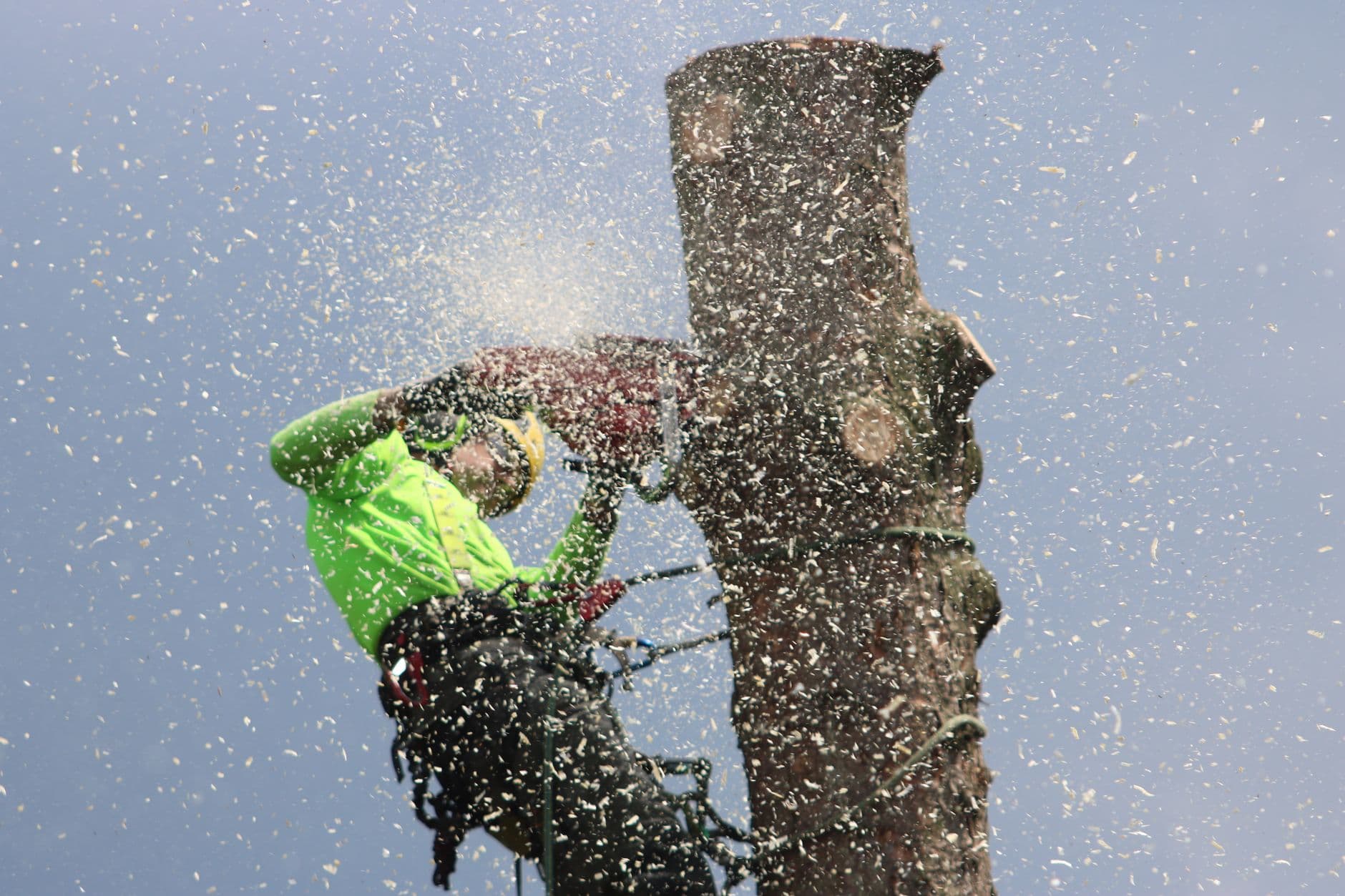
Chainsaws are involved in the majority of fatal and major injuries in tree work. Kickback, direct contact with the chain, and bar/chain failure all cause serious injuries. Your risk assessment should cover operator positioning, chain brake checks, PPE specification, and exclusion zones around the cutting area.
Under the Provision and Use of Work Equipment Regulations 1998 (PUWER), only trained and competent operators should use chainsaws. In practice, that means holding an NPTC Level 2 or 3 qualification for the specific operation — CS30/31 for felling and processing, CS38 for aerial chainsaw use. Using a chainsaw without the right qualification is a PUWER breach and will void most insurance policies.
Working at Height
Climbing trees, using MEWPs (mobile elevated work platforms), and working from ladders all fall under the Work at Height Regulations 2005. The regulations require that work at height is planned, supervised, and carried out safely. For climbing arborists, that means proper rope systems, a second anchor point when using a chainsaw aloft, and a documented aerial rescue plan.
Every climbing operation needs someone on the ground who can carry out an aerial rescue. If the climber gets injured or stuck in the tree, the ground crew must be able to reach them quickly. This isn't optional — it's a legal requirement under AFAG 402 (Aerial tree rescue).
Falling Timber and Debris
Falling branches, trunk sections, and wood chips are a constant hazard in tree work. Your risk assessment must define exclusion zones around the drop area and make sure no one is standing where timber could fall. Ground crew, members of the public, and passing traffic all need to be considered.
Rigging and Sectional Dismantling
When a tree is taken down in sections, each piece is lowered on ropes and rigging. Anchor failure, uncontrolled lowering, and ground crew exposure are the main risks here. Your assessment should cover rigging point selection, load estimation, lowering speed control, and exclusion zone management.
Wood Chipper Operations
Wood chippers cause serious injuries through entanglement, ejection, and kickback. Operators need proper training, the infeed controls must be in good working order, and the emergency stop should be tested before every use. A clear exclusion zone around the chipper is a must.
Public Safety
Tree work often happens near roads, footpaths, gardens, and buildings. Your risk assessment needs to address how you'll keep the public out of the work area — barriers, signage, banksmen, and traffic management where needed. If a branch or trunk section could reach a public area, you need proper controls in place.
Manual Handling
Lifting heavy logs, carrying equipment, and moving timber sections all pose manual handling risks. Your assessment should set limits on section sizes for individual lifting and specify when team lifting or mechanical assistance is needed.
Noise, Vibration, and Dust
Chainsaws, hedge cutters, and wood chippers all generate high levels of noise and hand-arm vibration. Under the Control of Noise at Work Regulations 2005 and the Control of Vibration at Work Regulations 2005, you must assess and manage exposure. Chainsaws are among the highest-risk tools for hand-arm vibration syndrome (HAVS) — a permanent, disabling condition. Rotation of operatives and exposure monitoring should be part of your plan for longer jobs.
Overhead Power Lines
Working near overhead power lines is one of the most dangerous situations in tree work. Contact with live lines has caused multiple fatalities. Your risk assessment must include clearance distances, and you should contact the electricity distribution company before starting work near any lines. AFAG 301 provides specific guidance on this.
What Your Tree Surgery Risk Assessment Must Include
A risk assessment for tree work needs to be specific to the job. A generic list of hazards that could apply to any trade won't cut it — commercial clients and principal contractors will spot it straight away.
Here's what a proper tree surgery risk assessment should cover:
- Hazard identification — specific to the actual work, not generic categories. 'Chainsaw kickback during crown reduction' is better than 'chainsaw use'.
- Persons at risk — who could be harmed: operators, ground crew, members of the public, residents, passing traffic.
- Initial risk rating — likelihood × severity before controls, typically on a 1–5 matrix producing a score from 1 to 25.
- Control measures — practical actions linked to each hazard. Not just 'wear PPE' but exactly what PPE and why.
- Residual risk rating — the risk level after controls are applied. If it's still high, you need more controls before work starts.
- Review and sign-off — signed by the person responsible, with a review date. On commercial sites, operatives may need to sign too.
The Legislation That Applies to Tree Surgery
Several sets of regulations apply to tree work. Your risk assessment should reference the ones that are relevant to the job.
- Health and Safety at Work Act 1974 — the over-arching duty to ensure, so far as is reasonably practicable, the health and safety of workers and others affected by the work.
- Management of Health and Safety at Work Regulations 1999 — requires suitable and sufficient risk assessments for all work activities.
- Provision and Use of Work Equipment Regulations 1998 (PUWER) — work equipment must be suitable, maintained, and used only by trained, competent operators.
- Work at Height Regulations 2005 — all work at height must be planned, supervised, and carried out safely. Applies to climbing, MEWPs, and ladder use.
- Lifting Operations and Lifting Equipment Regulations 1998 (LOLER) — applies to rigging, cranes, and any lifting equipment used in arboriculture.
- Personal Protective Equipment at Work Regulations 1992 (as amended 2022) — employers must provide suitable PPE at no cost to the worker.
- Control of Noise at Work Regulations 2005 — assess and control noise exposure from chainsaws, chippers, and hedge cutters.
- Control of Vibration at Work Regulations 2005 — assess and manage hand-arm vibration exposure from chainsaws and other vibrating tools.
PPE for Tree Surgeons
Tree surgeons need specialist PPE that goes beyond what most trades require. Under the Personal Protective Equipment at Work Regulations 1992 (as amended by the Personal Protective Equipment at Work (Amendment) Regulations 2022), employers must provide suitable PPE at no cost to the worker.
For chainsaw operations, the minimum PPE includes:
- Chainsaw helmet with ear defenders and visor — EN 397 / EN 1731 compliant.
- Chainsaw protective trousers — EN 381-5 Class 1 (minimum) for ground work, Class 2 for aerial work.
- Chainsaw gloves — EN 381-7, with cut-resistant protection on the back of the left hand (for right-handed operators).
- Safety boots with chainsaw protection — EN ISO 17249 Class 2 (minimum), with good ankle support and grip.
- Eye protection — mesh visor for outdoor chainsaw work, safety glasses for indoor or close-quarters cutting.
For climbing operations, you'll also need a climbing harness (EN 813 / EN 358), climbing rope (EN 1891), and appropriate connectors and friction devices. All climbing equipment should be inspected before each use and formally examined at least every six months under LOLER.
Qualifications and Competence
PUWER Regulation 9 says operators must receive adequate training. For tree work, that means recognised qualifications — not just "I've been doing it for years."
The main qualifications are:
- NPTC CS30 — cross-cutting and maintenance of a chainsaw.
- NPTC CS31 — felling and processing trees up to 380mm.
- NPTC CS38 — climbing and aerial rescue.
- NPTC CS39 — use of a chainsaw from a rope and harness.
- NPTC CS40 — dismantling and sectional felling.
- NPTC CS41 — crown reduction and canopy access.
A self-employed arborist should hold at least CS30, CS31, and CS38 to carry out basic tree surgery work. For commercial contracts, clients and principal contractors will usually expect the full suite of qualifications plus evidence of ongoing CPD.
AFAG Guidance — the Standard the HSE Expects
The Arboriculture and Forestry Advisory Group (AFAG) is a joint body including the HSE, the Forestry Commission, and industry bodies. AFAG publishes specific safe-working guidance for tree surgery operations, and the HSE expects this guidance to be reflected in your risk assessments.
Key AFAG leaflets to know:
- AFAG 301 — Working near overhead power lines.
- AFAG 401 — Tree-climbing operations.
- AFAG 402 — Aerial tree rescue.
- AFAG 403 — MEWPs for tree work.
- AFAG 501 — Chainsaws and cross-cutting.
- AFAG 701 — Arboriculture operations.
- AFAG 802 — Emergency planning.
If your risk assessment doesn't reflect AFAG guidance, an HSE inspector will want to know why. These aren't suggestions — they're the industry standard that the regulator uses to judge whether your controls are adequate.
Risk Rating in Practice
Most professional RAMS systems use a likelihood × severity matrix. Both factors are scored 1 to 5, giving a risk score from 1 to 25. Here's how it works in practice for tree surgery:
Likelihood
- 1 — Very unlikely: controls virtually eliminate the chance of it happening.
- 2 — Unlikely: would need an unusual combination of circumstances.
- 3 — Possible: could happen under normal working conditions.
- 4 — Likely: happens regularly in similar operations.
- 5 — Very likely: certain to occur without controls.
Severity
- 1 — Negligible: minor discomfort, no first aid needed.
- 2 — Minor: first aid required, short absence from work.
- 3 — Moderate: medical treatment, extended absence.
- 4 — Major: serious injury, hospitalisation.
- 5 — Catastrophic: fatality or permanent disability.
A risk score of 15 or above means the job shouldn't go ahead until you've added more controls. After controls are applied, recalculate the residual risk. If it's still above your acceptable threshold, you need to rethink the approach.
Common Mistakes in Tree Surgery Risk Assessments
Here's where most tree surgery risk assessments fall short:
- Being too generic — 'wear PPE' without specifying what type, what standard, and for which task.
- Missing the aerial rescue plan — every climbing operation needs a documented rescue procedure and someone on the ground who can carry it out.
- Ignoring the public — tree work near roads, paths, and gardens needs specific controls for public safety.
- Not checking overhead lines — contact with live power lines has killed multiple tree surgeons. Always check before starting.
- Forgetting about vibration — HAVS is permanent and disabling. Exposure must be assessed and managed, not just acknowledged.
- Using a template without adapting it — a risk assessment must reflect the specific job, site, and conditions. A copied template that doesn't match the work is worse than useless.