Quick answer
The short version
A plasterer risk assessment needs to cover the hazards that come with the job specifically, not the generic slips-and-trips list every site pack repeats. That means silica dust from sanding cured plaster, manual handling of 25kg bags, working at height on ceilings and high walls, and the repetitive strain that comes from hours of trowelling. This guide walks through each hazard, the legal duties behind it, and how to write it down properly.
Why Plasterers Need a Trade-Specific Risk Assessment
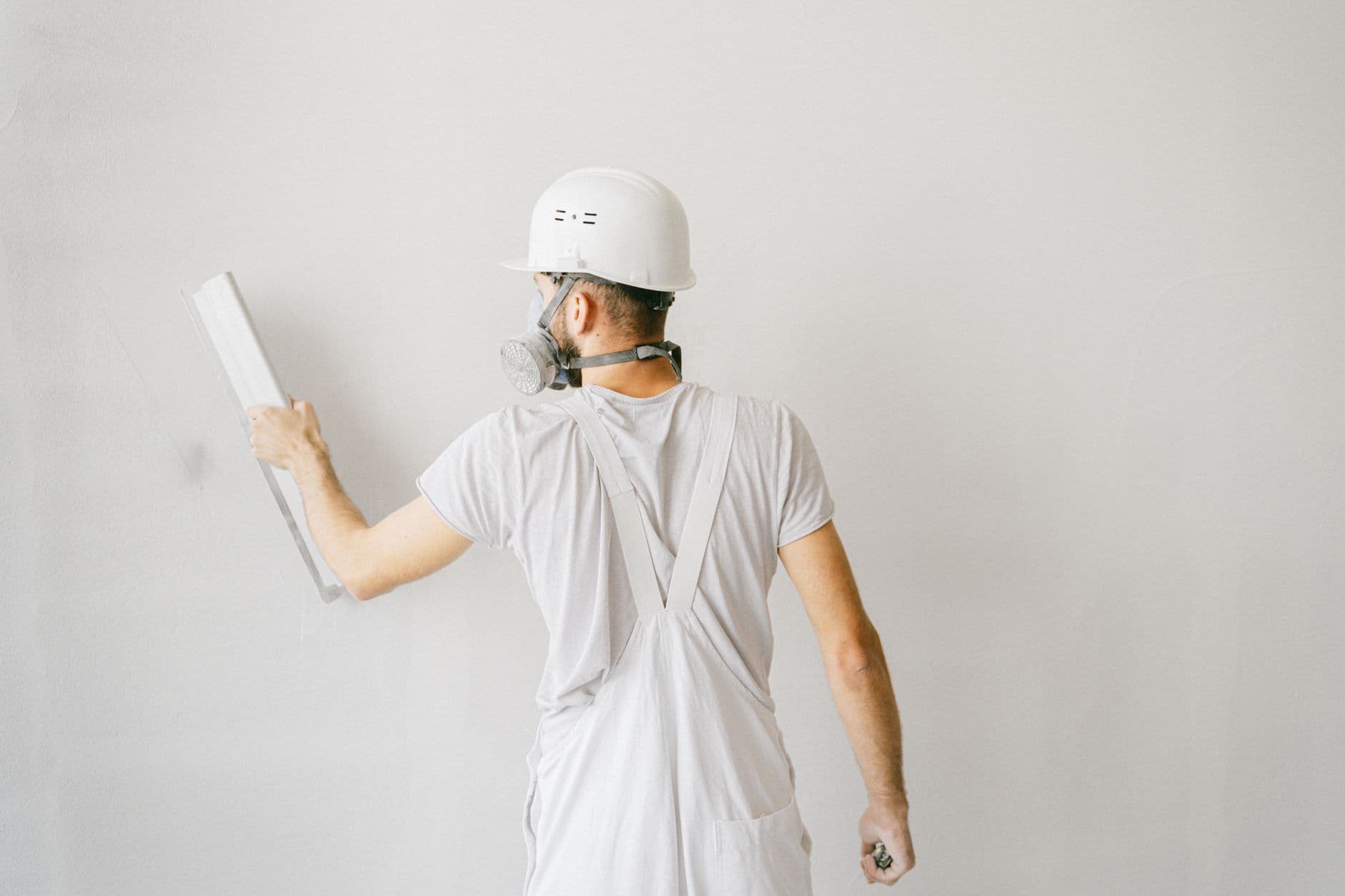
Plastering looks like one of the more straightforward trades on site, but the daily hazards are real and easy to underestimate. A plasterer mixes and carries heavy bags, sands cured surfaces that throw up fine dust, works overhead on ceilings and high walls, and repeats the same wrist and forearm movement for hours at a time. None of that shows up properly on a generic construction risk assessment written for a labourer walking around a site.
The legal position is straightforward even if it's rarely spelled out. The Health and Safety at Work etc. Act 1974 sets the general duty to protect anyone affected by the work. Underneath that sit the Control of Substances Hazardous to Health Regulations 2002 (COSHH) for plaster and cement dust, the Manual Handling Operations Regulations 1992 (MHOR) for lifting bags and boards, and the Work at Height Regulations 2005 (WAHR) for stilts, hop-ups and trestles. Each one expects controls that match the actual task, not a box ticked and left at that.
HSE inspectors visiting a plastering job don't expect a copy-pasted template. They expect an assessment that names the actual plaster being used, the actual access equipment on site, and the actual dust control in place for sanding. Getting that right protects the plasterer as much as it satisfies the paperwork.
Summary
At a glance
- Who it's for
- Plasterers and dry-liners working on UK sites and domestic jobs
- Key regulations
- COSHH 2002, MHOR 1992, WAHR 2005, PUWER 1998
- Main hazards
- Silica dust, manual handling, working at height, repetitive strain
- Best next step
- Check COSHH assessments are in place for plaster dust and additives
The Legal Framework for Plastering Work
The Health and Safety at Work Act 1974 is the backbone. It puts a general duty on employers and self-employed people to protect their own health and safety and that of anyone else affected by the work, and everything else in this guide sits underneath that one duty.
COSHH 2002 covers the substances a plasterer actually handles: plaster dust from sanding, cement dust from mixing render, and the additives and PVA used to prime surfaces before skimming. A COSHH assessment needs to name each of these, not just list "dust" as a single line item. See the COSHH essentials guide for how that assessment should be structured.
The Manual Handling Operations Regulations 1992 apply to every plaster bag carried across a site or up a staircase, and the Work at Height Regulations 2005 apply to stilts, hop-ups and trestles used to reach ceilings and high walls. PUWER 1998 covers the mixers, drills and other powered equipment used to prepare plaster and render, requiring that they're suitable for the job, properly maintained, and used only by people trained on them.
One point worth getting right in any written assessment: the PPE regulations are the Personal Protective Equipment at Work Regulations 1992 (PPER 1992), amended in 2022 to extend duties to limb (b) workers as well as employees. "PPE Regs 2002" is a common mistake in trade paperwork and isn't the correct citation.
Main Hazards Plasterers Face
Silica dust from sanding cured plaster and render is the hazard most often missed, because it happens after the messy part of the job feels finished. Cement dust from mixing render is a related but separate exposure, generated at the mixing stage rather than the sanding stage.
Manual handling comes from repeated lifting of 25kg plaster bags throughout the day, often up stairs or across uneven ground. Working at height covers ceilings and high walls reached on stilts, hop-ups or trestles, each of which carries a different set of controls. Repetitive strain builds up from trowelling, which is a sustained wrist and forearm movement repeated for hours rather than a single awkward lift.
Slip hazards come from wet plaster and PVA on floors, which can be as slippery as any spilled liquid on site. Skin irritation is a real risk from prolonged contact with wet plaster and additives, and working in occupied properties adds the need to manage dust, mess and access around people living in the space rather than an empty shell.
Silica Dust and COSHH
Plaster contains crystalline silica, and sanding cured plaster or render generates respirable crystalline silica (RCS), fine enough to reach deep into the lungs. This is the same underlying hazard covered in the broader construction dust guide, but it needs naming specifically for plastering work rather than folded into a general dust entry.
The workplace exposure limit (WEL) for RCS is 0.1 mg/m3 as an 8-hour time-weighted average. That's a low limit, and sanding a dry skim coat without any control can push exposure well past it in a short space of time.
Control measures worth naming specifically in the assessment: wet sanding where the finish allows it, since damping down the surface cuts airborne dust at the source. Local exhaust ventilation (LEV) fitted to sanding tools where wet sanding isn't practical. Respiratory protective equipment as the backstop, with an FFP3 mask as the minimum standard for dry sanding work, and fit testing to check the mask actually seals against the wearer's face.
Health surveillance is worth arranging for anyone regularly exposed to plaster dust, particularly plasterers doing dry sanding as a routine part of the job rather than an occasional task. The COSHH assessment itself needs to cover plaster dust, cement dust, PVA and any bonding agents or additives used, each with its own exposure route and control.
Checklist
- Assess silica dust exposure from sanding
- Check manual handling risks for plaster bags
- Verify access equipment for height work
- Confirm PPE for each task
- Brief the team on site-specific hazards
Manual Handling of Plaster Materials
A standard bag of plaster weighs 25kg, and the risk isn't really about any single lift, it's about repeated lifting across a full working day. Carrying bags up a staircase, across scaffolding or over uneven ground adds risk that a flat-ground lift in a warehouse doesn't have.
There's no legal weight limit written into the Manual Handling Operations Regulations 1992. What the regulations actually require is that hazardous manual handling is avoided where reasonably practicable, and where it can't be avoided, the risk is reduced to the lowest level reasonably practicable. That's a judgement based on the load, the person, the task and the environment, covered in more detail in the manual handling guide.
Team lifting is the go-to control for awkward loads, such as carrying bags up a narrow staircase or across a scaffold platform, but it only works if the team has agreed the route and the lift beforehand. Mechanical aids reduce risk more reliably than adding people to a lift. Trolleys move bags across level ground without anyone carrying weight at all, and a hoist is worth the setup time for any job putting materials onto upper floors.
Technique matters over the course of a day even when any single bag feels manageable. Keeping the load close to the body, avoiding twisting while carrying, and breaking a full pallet down into smaller trips rather than one heroic carry all reduce the cumulative strain that causes most manual handling injuries.
Working at Height for Plasterers
Ceilings and high walls need access equipment that matches the task, and getting that wrong is one of the more common site failures in plastering work. Stilts are not banned under the Work at Height Regulations 2005, but they do need a specific risk assessment, proper training, and a pre-use check every time before someone straps them on. Using stilts without any of that is where the real risk sits, not the equipment itself.
Hop-ups and trestles need a stable, level base every time they're set up, and guardrails or an alternative fall prevention measure where the height involved calls for it. The Work at Height Regulations 2005 put a duty on whoever's in charge of the work to plan it properly, supervise it, and provide equipment suitable for the specific task rather than whatever happens to be on the van.
Repetitive Strain and Ergonomic Risks
Trowelling is repetitive by nature, and the wrist and forearm movement involved builds up strain over hours and over years rather than causing an obvious injury on any single day. Prolonged kneeling and bending, particularly on skirting lines and low walls, adds a separate strain pattern to the same working day.
Control measures worth naming in the assessment: job rotation between team members so no one person is trowelling for the entire shift, anti-vibration mats or cushioned kneeling pads for prolonged floor-level work, and knee pads as standard kit rather than an optional extra. Early reporting of symptoms, whether it's wrist pain, numbness or knee discomfort, matters more than any single control measure, since strain injuries are far easier to manage before they become chronic.
PPE for Plasterers
Standard PPE for plastering work covers safety footwear and eye protection as a baseline for most tasks on site. Dust work needs an FFP3 mask at minimum along with goggles, covered in more detail in the silica dust section above.
Wet plaster work calls for chemical-resistant gloves and an apron, since prolonged skin contact with wet plaster and additives is a genuine irritant risk rather than just a mess to wash off later. Height work needs a helmet as standard and a harness where the task and the access equipment call for one.
Skin protection deserves its own mention. HSE guidance on skin at work flags dermatitis from wet plaster and cement as a real occupational risk, not a minor inconvenience. Barrier cream before starting work and proper wash facilities at the end of the day both reduce that risk, and neither should be treated as optional. The regulations covering all of this are the Personal Protective Equipment at Work Regulations 1992 (PPER 1992), amended in 2022.
Writing a Risk Assessment for Plastering Work
A plastering risk assessment follows the same basic structure as any other trade: identify the actual task, assess the hazards involved, select the controls that bring the risk down, brief the team, and keep the whole thing updated as conditions change.
Step by step
- 1Identify the taskPlaster type, mixing, application, sanding
- 2Assess the hazardsDust, manual handling, height, other trades
- 3Select controlsLEV, RPE, team lifting, stable access
- 4Brief the teamSite-specific hazards and PPE
- 5Record and reviewKeep the assessment updated if conditions change
Where this matters most for plastering is matching the assessment to the actual site. A new build shell with clear access and no finished surfaces to protect is a different risk picture to a refurb job with existing fixtures, which is different again to plastering in an occupied home with a client and their belongings around the work area. Other trades working nearby and members of the public passing through a domestic job both need naming specifically, not folded into a generic "other hazards" line. Keeping the assessment updated as the job moves from mixing to application to sanding matters more than getting every detail right on day one.
Common mistakes
- Not assessing silica dust from sanding cured plaster
- Using generic construction RAMS without plasterer-specific hazards
- Overlooking manual handling of 25kg bags
- Forgetting to check access equipment before use
- Missing COSHH assessments for PVA and additives