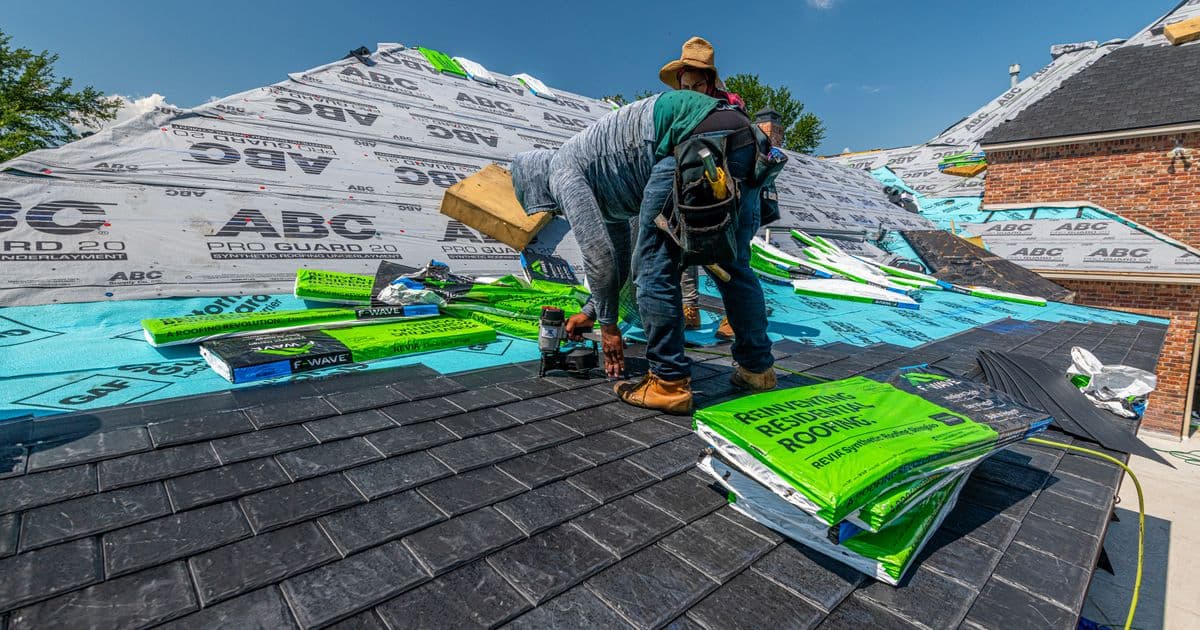
Roof Work Kills More People Than It Should
Roof work accounts for roughly a quarter of all deaths in the UK construction industry. That number hasn't shifted much over the years. In 2024/25, 35 workers were killed in construction across Great Britain, and falls from height were once again the leading cause. Within that, roof work is consistently the most over-represented activity.
Most of the people who die aren't inexperienced cowboys. Many are maintenance workers, general builders, and small contractors doing what they thought was a quick repair. They didn't assess the risk properly. Or they assessed it and ignored what the assessment said.
A roofing risk assessment isn't a form you fill in to keep the HSE happy. It's a working document that tells your team what could kill them and what you've done to stop that happening. If you're a roofer, or you employ roofers, you need one for every job.
The Law: What Applies to Roofers
Several pieces of legislation apply directly to roofing work. You don't need to memorise them, but you do need to know they exist and what they require.
- The Work at Height Regulations 2005 - these apply to all work at height, including roof work. They require you to plan, organise, and carry out work at height safely. Risk assessment is a legal requirement, not optional.
- The Construction (Design and Management) Regulations 2015 (CDM 2015) - apply to all construction work, including roofing. If you're the only contractor on a domestic project, you take on client duties under Regulation 7. You don't become a principal contractor - that role only exists when there's more than one contractor on the project.
- The Health and Safety at Work etc. Act 1974 - the overarching law. Section 2 requires employers to ensure the health and safety of their workers. Section 3 extends that duty to people not in your employment, including the public.
- The Personal Protective Equipment at Work Regulations 1992, as amended by the Personal Protective Equipment at Work (Amendment) Regulations 2022 - covers PPE requirements. PPE is a last resort, not a first control. If your risk assessment relies on PPE alone without higher-level controls, something's wrong.
- HSE guidance HSG33 (Health and Safety in Roof Work) - not law, but the HSE's official guidance. If you follow it, you're in a strong position. If you don't and something goes wrong, expect questions.
What a Roofing Risk Assessment Needs to Cover
A risk assessment for roofing work needs to identify the specific hazards of that job on that site. Generic copy-paste documents won't protect your workers and won't impress an inspector. Here's what to think through.
Falls From Height
This is the big one. Every roofing risk assessment starts here. You need to identify where people could fall from, how far they'd fall, and what's in place to stop it happening. That means edge protection, scaffolding, harnesses, safety nets - whichever combination suits the job. The hierarchy applies: avoid working at height where you can, prevent falls where you can't, and mitigate the consequences as a last resort.
On sloping roofs, scaffolding is the standard. For short-duration tasks, properly secured roof ladders may be acceptable. But "short duration" means minutes, not hours. If the job takes longer, you need proper scaffolding.
Fragile Surfaces
Every roof should be treated as fragile until a competent person has confirmed it's not. That's the HSE's position and it's the safe starting point. Fibre-cement sheets, rooflights, old metal sheets, and liner panels can all give way without warning. Falls through fragile materials are the single most common cause of roofing fatalities - more common than falls from edges.
Your risk assessment needs to identify whether fragile materials are present, how you'll protect workers, and how you'll mark or barrier off any fragile areas. Don't assume a roof is solid just because it looks it.
Roof Edges and Openings
Falls from roof edges happen on both commercial and domestic projects. The HSE notes that many deaths each year involve smaller builders on domestic roofs. Edge protection - a secure double guardrail and toeboard - is the standard control for flat roofs. For pitched roofs, scaffolding at the eaves with proper edge protection on all sides, including the rear on terraced properties.
Access to the Roof
How people get onto the roof matters. Ladders, scaffolding, stair towers, mobile access equipment, and roof access hatches are all options. Each has its own risks. Ladders are acceptable for short-duration access but not as a working platform. Your risk assessment should specify the access method and why it's suitable for the job.
Weather Conditions
Rain, wind, ice, and frost all make roof work more dangerous. A pitched roof that's manageable in dry conditions becomes a slide in the rain. Your risk assessment should include criteria for stopping work - what wind speed is too high, what conditions make the roof unsafe. This needs to be monitored throughout the job, not just checked once in the morning.
Manual Handling
Roofers carry heavy materials up ladders, across scaffolding, and across roof surfaces. Tiles, slates, ridge pieces, lead rolls - all of these need lifting and positioning. Your risk assessment should cover how materials get to the roof, how they're distributed across the working area, and what mechanical aids are available.
Asbestos
Many older roofs contain asbestos cement sheets or other asbestos-containing materials. If there's any possibility of asbestos on the job, your risk assessment must address it. That means an asbestos survey before work starts, and a plan for dealing with it safely. Non-licensed asbestos work has its own set of requirements under the Control of Asbestos Regulations 2012.
Falling Objects
Materials, tools, and debris can fall from the roof and hit people below. Your risk assessment needs to cover the area below the work zone - exclusion zones, signage, and barriers where the public or other workers could be at risk. On domestic projects, think about the garden, the pavement, and the neighbours.
Electrical Hazards
Overhead power lines and nearby electrical installations are a risk on many roofing jobs. If there are power lines near the roof, your assessment needs to address minimum safe distances, barriers, and what happens if the work can't be done safely. Contact with overhead lines has killed roofers.
How to Write a Roofing Risk Assessment That Works
A risk assessment is only useful if the people doing the work understand it. That means plain language, job-specific detail, and controls that are realistic for the site.
- Start with the job, not the form. What are you actually doing? Replacing tiles? Fixing flashing? Installing solar panels? The hazards follow the work.
- Walk the site first. Look at the roof, the access, the surroundings. Note anything that affects safety: overhead lines, fragile materials, the condition of existing scaffolding.
- Identify the hazards specific to this job on this site. Not every roofing job has the same risks. A flat roof replacement is different from a pitched tile repair.
- Decide who could be harmed and how. Workers on the roof, people below, neighbours, the public. Think beyond your own team.
- Put controls in place, starting with the most effective. Avoid the hazard first. If you can't avoid it, prevent access to it. If you can't prevent it, reduce the impact. PPE is the last resort, not the first.
- Write it down in a way the team can follow. Short sentences. Clear controls. No jargon. If someone new to the site can read it and understand what to do, you've done it right.
- Review it on site. Conditions change. Weather shifts. The scope of the job changes. Your risk assessment needs to keep up.
Common Mistakes on Roofing Risk Assessments
These come up again and again when things go wrong:
- Using a generic template without adapting it to the specific job. A risk assessment for a warehouse re-roof is not the same as one for a domestic tile repair.
- Relying on PPE as the primary control. Harnesses and lanyards are fall arrest, not fall prevention. They should be backed up by scaffolding, edge protection, or other higher-level controls.
- Not addressing fragile surfaces. If you haven't checked whether the roof contains fragile materials, you haven't done a proper assessment.
- Ignoring weather conditions. A risk assessment written on a sunny morning is no use when the rain starts at 2pm.
- Not briefing the team. A risk assessment sitting in a folder on site does nothing. Everyone on the job needs to know what the risks are and what controls are in place.
- Treating it as a one-off. Risk assessments need reviewing when conditions change, when the scope changes, or when something goes wrong.
Domestic Roofing Jobs: What's Different
If you're the only contractor on a domestic project - a tile repair, a re-roof, a loft conversion - CDM 2015 still applies. You take on the client duties under Regulation 7, which means you need to make sure the project is managed safely from start to finish. You don't become the principal contractor. That role only exists when there's more than one contractor on the project.
You don't need a formal health and safety file for a single-contractor domestic project. But you do need a construction phase plan, and you do need a risk assessment. The construction phase plan doesn't have to be a 50-page document. For a straightforward domestic roofing job, it can be short and practical, as long as it covers the key risks and controls.
An F10 notification to the HSE is only required if the project will last longer than 30 working days with 20 or more workers on site at the same time, or involve more than 500 person-days of work. Most domestic roofing jobs don't hit these thresholds, but check if you're unsure.
PPE for Roofing Work
PPE for roofing typically includes hard hats, safety boots with good grip, gloves, and eye protection. On pitched roofs or where there's a risk of falling, a harness and lanyard connected to a suitable anchor point may be needed - but this is fall arrest, not fall prevention. Scaffolding and edge protection come first.
PPE is covered by the Personal Protective Equipment at Work Regulations 1992, as amended by the Personal Protective Equipment at Work (Amendment) Regulations 2022. Your employer must provide suitable PPE free of charge. If you're self-employed, you need to provide your own. Either way, the risk assessment tells you what PPE is needed.
When to Review Your Risk Assessment
A risk assessment isn't a document you write once and forget. Review it when:
- The scope of the job changes - you're doing more than originally planned, or the client has added something.
- Conditions on site change - weather, access, other trades arriving, damage to scaffolding.
- Something goes wrong - an incident, a near miss, or a dangerous occurrence.
- New information comes to light - you find asbestos, the roof structure is different from what you expected, or there are fragile materials you didn't know about.
- A significant amount of time has passed since the original assessment was written.